
Pragya Misra, OpenAI's first India hire and former head of strategy and global affairs, has been promoted to Head of Business Development for India and South Asia. She announced her new leadership role on Tuesday, highlighting India's status as ChatGPT's largest country. Misra's new focus will be on building partnerships to drive AI transformation for businesses and expand technology access across the region.

S Mahendra Dev, chairman of the Economic Advisory Council to the Prime Minister (EAC-PM), stated that India needs to increase the manufacturing sector's share in its GDP from the current 16-17 per cent to 25 per cent by 2047 to achieve developed economy status. This goal requires an average real GDP growth of around 8 per cent annually over the next 21 years, supported by a 34-35 per cent investment rate and diversified long-term financing.

Prime Minister Narendra Modi has announced a significant 24,000 crore Nepalese rupees development package for Nepal, further solidifying bilateral ties and launching key India-assisted projects, including a new cross-border passenger rail link between Ayodhya and Janakpur Dham. This move signals a major reset in relations after a period of strain over border disputes, with both leaders emphasising deep kinship and mutual support.

Suzuki Motor Corporation is set to revolutionise its operations by halving vehicle development times and significantly boosting efficiency by 2030, while committing to a diverse multi-powertrain strategy that includes BEVs, hybrids, and carbon-neutral fuels.

Reports claiming that India has proposed allowing military aircraft to use Nepal's Bagdogra entry point are false, sources said on Sunday, dismissing media reports suggesting any such move.

India has launched three indigenous AI foundation models, EKA-1, Dhir 2B, and Dhir 5B, under the IndiaAI Mission. Developed by Soket Labs Technology and Research and ZenteiQ AiTech Innovations, these models aim to enhance India's technological and strategic autonomy in artificial intelligence, offering solutions for various sectors including banking, cybersecurity, defence, and government services, with a focus on Indian languages and offline capabilities.

Microsoft India and South Asia President Puneet Chandok highlighted at the Bengaluru Tech Summit that while AI adoption is straightforward, achieving tangible impact on the ground presents the greater challenge. He urged leaders not to delay embracing AI, drawing parallels with ISRO's innovative approach to space exploration. Chandok also stressed India's crucial role in global AI development, stating that if AI works for India's diverse population, it will work for the world.
Indian AI startup Sarvam has signed a five-year agreement with the Ministry of Defence to develop and deploy artificial intelligence applications for the armed forces. This Memorandum of Understanding with Headquarters Integrated Defence Staff aims to enhance operational capabilities, decision support, and training across the Army, Navy, and Air Force, focusing on building an indigenous AI layer on sovereign infrastructure.

India U-15 head coach Bibiano Fernandes shares his philosophy for the upcoming FIFA U-15 World Cup and Festival in Baku, Azerbaijan. He emphasises developing a strong footballing foundation, tactical flexibility, and good character among his young players, as they prepare to face teams like Laos, Bahrain, and Senegal starting October 24.

The Union Cabinet has approved the Khelo India Sports Goods Manufacturing Scheme with an outlay of Rs 1,856.67 crore for 2026-2033-34. This initiative aims to strengthen India's position in the global sports goods sector through dedicated manufacturing zones, research, skill development, and market expansion, fostering self-reliance and creating employment opportunities.
IBM Chairman and CEO Arvind Krishna details the company's substantial annual investment in India and its global USD 10 billion commitment to quantum computing over the next five years. He addresses the potential for AI to displace 10-20 per cent of jobs, particularly in the BPO sector, while also highlighting India's significant opportunity in the AI ecosystem. Krishna urges India to accelerate AI adoption, scale existing tech initiatives, and build its semiconductor manufacturing, advocating for a light-touch approach to AI regulation and emphasizing critical thinking in an AI-driven economy.

The Boxing Federation of India has appointed Swedish strength-and-conditioning expert Rickard Nilsson as the Head of Sports Science until the 2028 Los Angeles Olympics. Nilsson will focus on scientific training, performance monitoring, and athlete development, working closely with Indian boxers and coaching staff both on-ground and remotely.

The Comptroller and Auditor General of India (CAG) is set to introduce an in-house large language model (LLM) on Monday, developed by IIT Madras, to streamline auditing processes by providing a single platform for internal inspection reports, auditing standards, and guidelines.

India is proposing the Data Empowerment and Protection Architecture (DEPA) for AI Training, a national framework designed to enable startups, researchers, and companies to train AI models using data from hospitals, banks, and public agencies while ensuring privacy and security. This initiative aims to unlock significant AI-driven value for India's GDP by 2030.

The Indian government has significantly simplified its visa regime, reducing main categories from 13 to nine and sub-categories from 49 to 23. This initiative also cuts down fields in visa application forms by 65-70 per cent, aiming to make the process more coherent and responsive for foreign nationals. Key changes include renaming the Tourist Visa to Visitor Visa, consolidating medical and student visas, and introducing a Production Investment Business Visa.

Chintan Parikh, a presidential candidate for the All India Tennis Association (AITA), has unveiled an ambitious plan to professionalise the body and make it financially sustainable. His vision includes increasing AITA's corpus from Rs 25 crore to Rs 250 crore within four years, bringing four major international tournaments featuring top-50 players to India, and reforming the AITA Trust. Parikh also advocates for a Kazakhstan-inspired development model, greater corporate involvement, and independent audits for state associations.
The All India Football Federation (AIFF) has announced a multi-year partnership with Dream Sports Foundation (DSF) to strengthen U16 football in India, focusing on grassroots development and a cohesive pathway for young players.
Indian judoka Khushbu Darjada won a silver medal at the Dakar Youth Olympic Games in the women's 63kg category. She hopes her achievement will inspire more children from Gujarat's Siddi community to pursue sports and achieve international recognition. Darjada, who is 15, aims to improve her technique and eventually win Olympic gold, drawing inspiration from her family, especially her elder sister.

India has secured a spot among the top 10 leading emerging-market performers in artificial intelligence (AI) readiness, with private investment in AI more than tripling to USD 4.1 billion in 2025, according to a new World Bank report.

Tata Trusts Chairman Noel Tata has voiced concerns that a proposed public listing of Tata Sons could fundamentally alter the group's traditional business philosophy, potentially leading to profits being prioritised over philanthropy. This comes amid an ongoing dispute between Tata Trusts and the Tata Sons board regarding the holding company's ownership structure and leadership.

Around 70 scholarships are awarded every year to students pursuing postgraduate studies at the University of Cambridge.

Zoho cofounder Sridhar Vembu dismisses exaggerated fears about AI's catastrophic potential and global development pauses. He advocates for India to adopt an independent AI strategy, fostering partnerships while avoiding entanglement in US-China tech rivalry. Vembu stresses extensive investment in foundational R&D across sectors, distinguishing it from costly frontier AI model development. He also highlights concerns about AI's impact on human judgment, skill erosion, and job disruption, particularly in software engineering, while remaining optimistic about new economic opportunities.
Zoho co-founder Sridhar Vembu argues that predictions of AI's catastrophic outcomes are overstated and a global pause in AI development is improbable. He urges India to adopt an independent AI strategy, focusing on extensive foundational R&D across sectors, while remaining wary of market monopolisation attempts by major tech players. Vembu also highlights concerns about AI's impact on human judgment, skill development, and job markets, particularly for junior professionals.

Jimmy Naval Tata, trustee of the Sir Ratan Tata Trust and younger brother of late Ratan Tata, has strongly advocated for the listing of Tata Sons. He argues that a public listing is essential to end secrecy, ensure statutory accountability, and restore the original governance structure of the Tata group, especially in light of recent developments within the trusts.
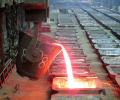
The Indian government has approved a Rs 2,814 crore capital expenditure support scheme to promote domestic processing of critical minerals like lithium and nickel. This five-year scheme, running until 2030-31, aims to reduce import dependence, develop value chains, and enhance India's self-reliance in essential materials for clean energy and modern technologies. It includes a 30% capital subsidy for setting up processing plants.

Sports Minister Mansukh Mandaviya launched the Extramural Research Grant Policy of the National Dope Testing Laboratory (NDTL) at the WAADS meeting in New Delhi. This policy aims to promote advanced research in doping detection and prevention, reinforcing India's commitment to clean sports ahead of major international events like the 2030 Commonwealth Games and 2036 Olympics.
A new Rs 6,000 crore integrated phenol and acetone plant, India's largest, has been inaugurated in Haldia, West Bengal. Developed by Adperma Private Limited, a subsidiary of Haldia Petrochemicals Limited (HPL), the facility aims to reduce India's reliance on imported industrial chemicals and boost the domestic specialty chemicals sector. West Bengal's Chief Minister announced a new industrial policy following the inauguration.
BRICS leaders, in their New Delhi Declaration 2026, have called for wider access to Artificial Intelligence resources and stronger international cooperation to ensure the technology is safe, secure, inclusive, and reliable. The declaration outlines a broad technology agenda covering AI, cybersecurity, digital public infrastructure, telecom, quantum technologies, and advanced manufacturing, committing to implement the grouping's statement on 'Global Governance of Artificial Intelligence'.

Prime Minister Narendra Modi has challenged Indian industry leaders to increase job creation and employee salaries, arguing that government tax concessions and income tax relief should translate into greater employment and economic activity. He also urged businesses to improve product quality for the domestic market and leverage new trade agreements for global competitiveness.

The Union Culture Secretary Vivek Aggarwal announced that iconic artefacts like the Dancing Girl of Mohenjo-daro and the Nizam's jewels will be moved to the upcoming Yuge Yugeen Bharat Museum. The new museum, billed as the world's largest, will be developed in the North and South Block complex and will feature eight thematic segments. The National Museum will remain distinct but will be a primary source of objects for the new museum, which will be implemented in phases by 2031.

'This will always be his home,' says CSK owner N Srinivasan as MS Dhoni transitions from player to mentor after a legendary 19-year IPL career.

Microsoft has inaugurated its India South Central data centre region in Telangana, marking its fourth cloud region in the country and significantly expanding its cloud and AI infrastructure. This strategic investment supports Telangana's ambitious goal of achieving 5 GW of data centre capacity by 2029 and attracting USD 30 billion in digital infrastructure investments, further solidifying Hyderabad's role as a global technology hub.
Microsoft has inaugurated its India South Central data centre region in Telangana, marking its fourth cloud region in the country and significantly expanding its cloud and AI infrastructure. This strategic investment supports Telangana's ambitious goal of achieving 5 GW of data centre capacity by 2029 and attracting USD 30 billion in digital infrastructure investments, further solidifying Hyderabad's role as a global technology hub.

A joint report by Dell Technologies and Zinnov reveals that despite high ambition, nearly 70% of India's Global Capability Centres (GCCs) are stuck at the pilot stage for AI adoption. Foundational gaps in data, infrastructure, and governance are identified as key bottlenecks preventing the scaling of AI initiatives into enterprise-wide production. The report highlights the need for significant reskilling of the workforce and robust foundations for industrialising AI responsibly.
India's frontier model company Sarvam secured a dominant 87% share of the total funding received by the country's startups building artificial intelligence (AI) for Indian languages in 2026, raising $345 million out of a total of $399 million, according to a Tracxn report.
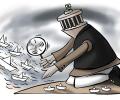
New Zealand Prime Minister Christopher Luxon stated that the historic Free Trade Agreement with India, now in effect, will help grow both economies, allowing Kiwi businesses to reach over a billion more customers with significantly reduced tariffs, leading to 'more jobs and higher wages for Kiwis'.
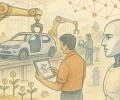
IIT-Kharagpur announced the establishment of India's first dedicated academic school for Physical Artificial Intelligence (AI), named the Benjamin Gupta School of Physical AI. Funded by a Rs 35 crore investment, including contributions from alumnus Vinod Gupta and an anonymous donor, the school will focus on developing intelligent systems that interact with the physical world, moving beyond conventional data-driven AI. Academic programmes are expected to commence soon, aiming to foster reliable and responsible AI technologies for various applications.

Civil Aviation Minister K Rammohan Naidu announced India's ambition to produce its first indigenous civilian aircraft within two years through a joint venture. He highlighted the rapid growth of the country's aviation sector, with significant aircraft orders, planned new airports, and potential for manufacturing jet engines and Sustainable Aviation Fuel, underscoring India's increasing role in global aviation.

'Pranab-ji, had developed serious differences with P Chidambaram, and on one occasion, in 2010, I think, after expressing his frustration, he shocked me with the suggestion that perhaps it was time for a change at the top, which I understood as a hint of his long-held desire to become prime minister.'

J R D Tata, chairman of the Tata group from 1938 to 1991, said that whenever he had to make a difficult decision, he would ask himself, what will be good for India, and what will be good for the Tatas. If he had a doubt, he would decide in favour of India. In the long run, it would turn out well for the Tatas too, he said, points out Arun Maira.
